The Little Boy Who Erased His Face
Once upon a time, in a faraway town, a little boy erased his face.
At first, he only rubbed out one of his eyebrows and found it absolutely hilarious. He stood in front of the mirror and burst into loud laughter at his strange new appearance. His parents weren’t home — they had gone to visit an aunt — and they had allowed him to stay behind on his own.
Adults only ever talked about boring, meaningless things anyway; he would have just been bored among them.
Later, when he started feeling restless again, he took out his eraser once more and erased his other eyebrow. Then his ears. He was curious whether he could still hear without them.
He went into the kitchen, took a large pot out of the cupboard, and dropped it on the floor to make a loud clang.
“Wow!” he marvelled. “Look at that — even without ears, people can still hear just fine!”
Delighted with his discovery, he hopped around the room with joy at how clever and funny his game was.
Then he returned to the mirror and kept erasing. Little by little, he rubbed away everything from his face, until only a tiny mole remained near where his nose used to be. He didn’t like that either, so he quickly erased it too. Now he looked truly peculiar in the mirror.
For a while, he amused himself by pulling poses, but then he had a better idea: he would go outside and fool the people in the street.
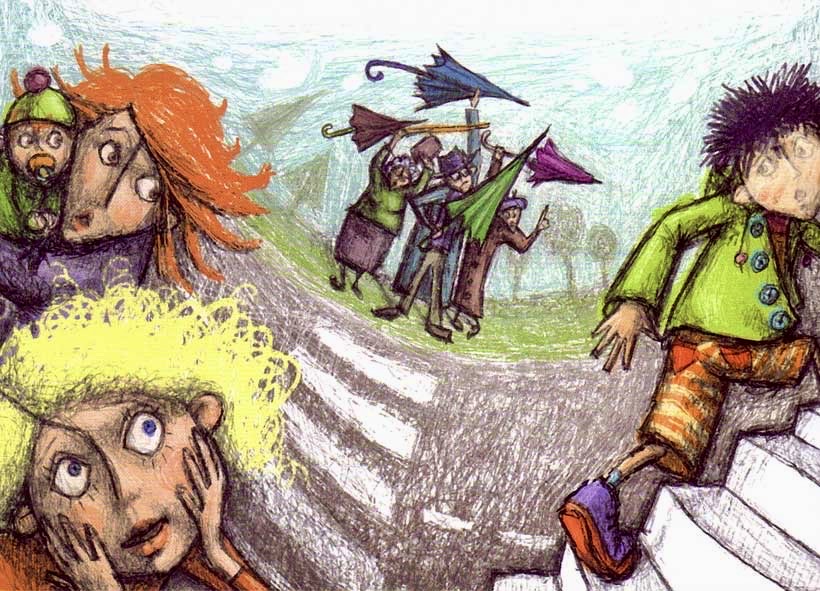
He threw on his spring coat, deliberately not putting on a hat so nothing would cover his head, and ran out into the street. It was early afternoon, and the town was full of strolling people and families. Suddenly, the boy felt very lonely among them, and he was just on the verge of crying when a little girl appeared beside him. She seemed about the same age, and it was impossible to say where she had come from so suddenly.
She stepped closer and stared intently at his face.
“What a strange little boy you are! What’s your name? How old are you? Where do you live? And where are your parents?”
The little boy was surprised. He had expected people to be scared of him. But no one seemed frightened — instead, they gazed at him seriously, as though trying to understand what might be wrong with him.
This made him feel a little embarrassed.
“Oh, poor little boy!” a sympathetic mother finally broke the silence. “He must have suffered terribly to disfigure himself like this.”
The others didn’t speak, but stood quietly, shaking their heads in sad agreement. This embarrassed the boy with the erased face even more, and he began to feel deeply uncomfortable.
He thought he would scare them instead, so he started to snort angrily, flail his arms, and bare his teeth — although this last part was particularly difficult without any teeth.
But the people only laughed kindly, or at best smiled gently and patted him on the shoulder.
Furious, he bit their hands and ran away as fast as he could so he wouldn’t have to see them anymore.
Instantly, their sympathy vanished. Outraged, they chased after him, waving umbrellas and sticks in the air. The poor boy barely managed to escape. He ran up the stairs and hid in his room. His teeth chattered, and his whole body trembled.
Anxiety slowly crept over him.
How would his nose, eyes, and mouth ever get back onto his face?
Cautiously, he crawled out from under the bed and began to think. The simplest solution, it seemed, would be to draw his erased face back himself. But no matter how hard he tried, it wouldn’t work. Even when he drew eyes, a nose, and a mouth, the pencil left no mark on his skin, no matter how sharp he made it or how hard he pressed.
In despair, he took out the phone book and began searching through it. He looked under “E” for “Eye Drawing Services” but found nothing like it. Then came “N” for “Nose Painter” and “E” for “Ear Drawer,” but there were no such businesses listed.
It seemed nobody could help him. From now on, he would have to live without a face.
What would his parents say when they came home? Oh God — what would they say?! — the boy panicked even more.
“I shouldn’t have erased my face, I shouldn’t have!” he shouted hopelessly.
And just then, someone knocked softly on the door.
At first, the little boy didn’t dare open the door. He even quickly hid back under the bed, afraid it might be his parents returning home.
But after a moment, he slowly gathered courage, crept out, and cautiously peeked through the peephole.
To his astonishment, it was the same little girl from the riverside — the one who had appeared beside him so suddenly.
He opened the door slowly, and the girl stepped into the hallway.
“Your face is all smudged! Have you been crying?” she asked gently.
The boy felt a strange warmth at her kindness — it seemed so genuine.
“I have,” he admitted, surprised that she could see his tears even though they weren’t visible at all.
“I can’t draw my face back,” he said sadly. “But I don’t want to be a faceless boy anymore… My nose wasn’t very nice, and I had an ugly birthmark too, but still… I don’t want to be without a face.”
“Why don’t you ask your very best friend to draw you a new one?” the girl suggested. “That’s what I would do. Your best friend would certainly help.”
“I don’t have any friends,” said the boy quietly.
“How is that possible?” the girl asked, genuinely shocked. “Everyone has friends. Don’t they?” she added, uncertainly, as if questioning her own belief.
“I don’t think everyone does,” said the boy. “I’m sure there are people who are lonely because they don’t have any friends.”
“Well… then I’ll be your friend, if you want,” said the girl. “I’m good at being a friend — I have lots of practice. Would you like that?”
“…All right,” the boy replied quietly. “Be my friend.”
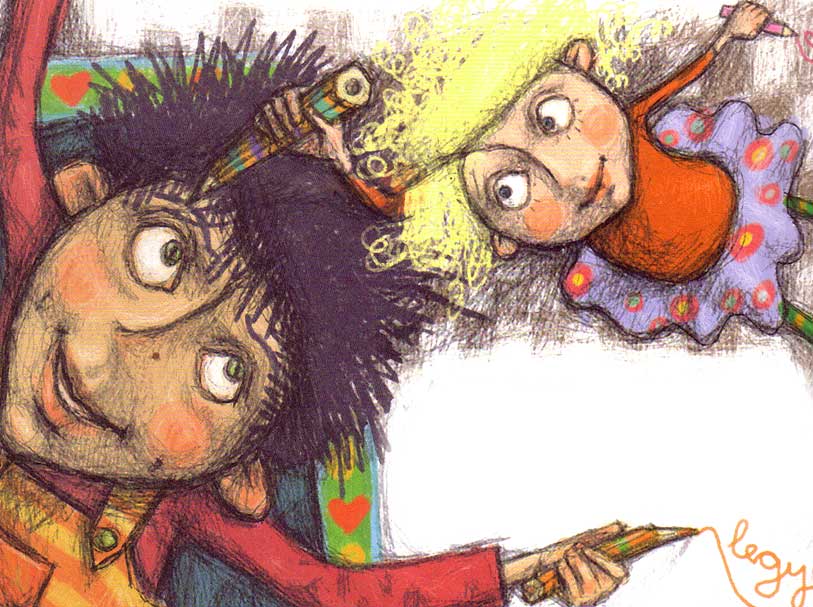
And so, they brought out a box of coloured pencils, and the girl carefully drew his face back — first the erased eyebrows, then the ears, in the exact order he had rubbed them away.
They remained friends for many, many years.
And whenever one of their faces faded or was accidentally erased by life, they would patiently redraw each other’s — every single time.
***
“The Little Boy Who Erased His Face” is a symbolic story about identity, loneliness, and the healing power of connection/true friendships.
Children sometimes struggle with feelings they cannot name — shame, isolation, fear of not being liked, or confusion about who they are. In the story, the boy “erases his face” as a playful act at first, but it gradually becomes a metaphor for losing his sense of self when he feels unseen or alone. Even without words for it, many children understand what it feels like to want to disappear — or to wish they could change something about themselves to feel accepted.
What ultimately restores him is not magic, punishment, or correction — but friendship. A kind peer who sees him, accepts him, and helps him “redraw” his face becomes the bridge back to selfhood. This reflects a psychological truth: children often rebuild their inner world through safe, caring relationships.
Parents can use this story to gently talk with their child about:
• Feeling sad, lonely, or “not themselves”
• Times they wished they could hide or change
• The importance of friends who understand
• How kindness can help us feel whole again
This is a quiet tale of emotional resilience — one that reminds children (and adults) that even when a part of us feels erased, the right kind of connection can help us draw ourselves back.
Illustrations:
© Fruzsina Kun – illustrations originally created for the Hungarian publication of “The Little Boy Who Erased His Face” in the anthology Egyszervolt (Once Upon a Time, 2006). Her illustration also appears on the cover of this book. Used with the artist’s permission.

