Selected children’s stories
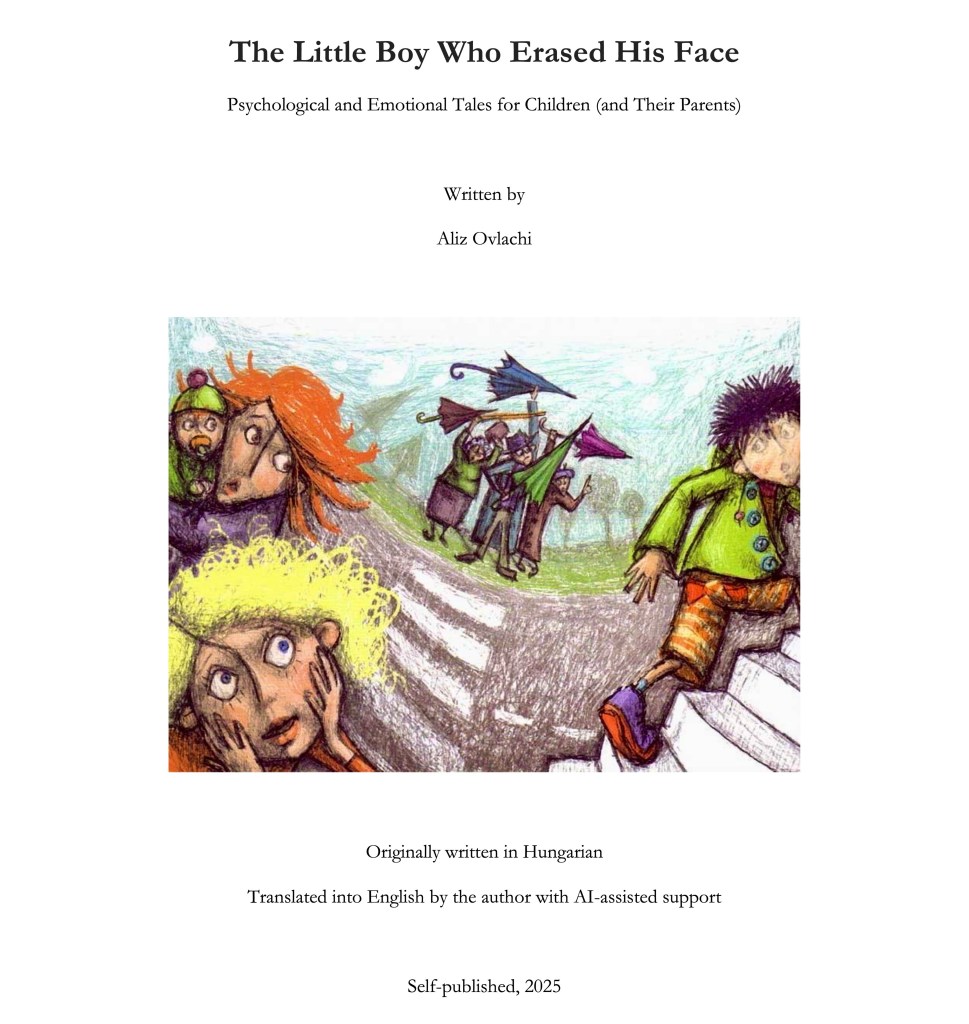
These stories were written more than a decade ago, during a time when I was still living in Hungary. They have since been translated from their original Hungarian versions, with care to preserve their emotional tone, imagery, and meaning.
Although each story is fictional, they are deeply rooted in psychological and emotional truths about childhood — particularly around themes such as vulnerability, emotional injury and repair, loneliness, resilience, empathy, moral awakening, fear, anger, belonging, loss, imagination, and the quiet ways children make sense of themselves and the world.
They do not follow a linear order or developmental progression; rather, they are placed randomly throughout the book, allowing readers to encounter each story as a standalone emotional experience.
These stories are broadly suitable for a wide age range (approximately from 6 to 12 years old), though older children, adolescents, and even adults may resonate with the symbolic layers in different ways. Younger children may benefit from being read to and having the more complex emotional meanings gently discussed with them.
At the end of each story, a short Parent Reflection is included. These notes are designed to help caregivers understand the underlying psychological themes, the emotional struggles a child reader may connect with, and what kind of conversation or emotional learning each story may support.
Some stories explore emotional pain before reaching understanding or transformation, so sharing and discussing them in a safe, empathic relational space is encouraged.
These are not educational stories in a didactic sense. Rather, they aim to create emotional space: to name, symbolise, soften, and hold feelings that children (and sometimes their adults) cannot always express directly.
I hope these stories offer moments of recognition, comfort, and quiet courage — both for the children who read them, and for the grown-ups who walk alongside.
The book can be downloaded here: https://ovlachi.gumroad.com/l/arkgz
The Little Boy Who Erased His Face
Once upon a time, in a faraway town, a little boy erased his face.
At first, he only rubbed out one of his eyebrows and found it absolutely hilarious. He stood in front of the mirror and burst into loud laughter at his strange new appearance. His parents weren’t home — they had gone to visit an aunt — and they had allowed him to stay behind on his own.
Adults only ever talked about boring, meaningless things anyway; he would have just been bored among them.
Later, when he started feeling restless again, he took out his eraser once more and erased his other eyebrow. Then his ears. He was curious whether he could still hear without them.
He went into the kitchen, took a large pot out of the cupboard, and dropped it on the floor to make a loud clang.
“Wow!” he marvelled. “Look at that — even without ears, people can still hear just fine!”
Delighted with his discovery, he hopped around the room with joy at how clever and funny his game was.
Then he returned to the mirror and kept erasing. Little by little, he rubbed away everything from his face, until only a tiny mole remained near where his nose used to be. He didn’t like that either, so he quickly erased it too. Now he looked truly peculiar in the mirror.
For a while, he amused himself by pulling poses, but then he had a better idea: he would go outside and fool the people in the street.
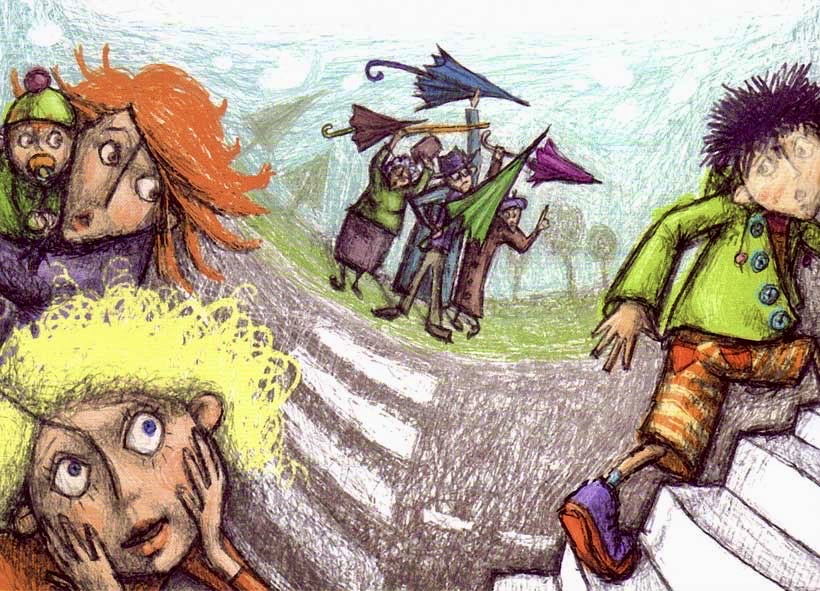
He threw on his spring coat, deliberately not putting on a hat so nothing would cover his head, and ran out into the street. It was early afternoon, and the town was full of strolling people and families. Suddenly, the boy felt very lonely among them, and he was just on the verge of crying when a little girl appeared beside him. She seemed about the same age, and it was impossible to say where she had come from so suddenly.
She stepped closer and stared intently at his face.
“What a strange little boy you are! What’s your name? How old are you? Where do you live? And where are your parents?”
The little boy was surprised. He had expected people to be scared of him. But no one seemed frightened — instead, they gazed at him seriously, as though trying to understand what might be wrong with him.
This made him feel a little embarrassed.
“Oh, poor little boy!” a sympathetic mother finally broke the silence. “He must have suffered terribly to disfigure himself like this.”
The others didn’t speak, but stood quietly, shaking their heads in sad agreement. This embarrassed the boy with the erased face even more, and he began to feel deeply uncomfortable.
He thought he would scare them instead, so he started to snort angrily, flail his arms, and bare his teeth — although this last part was particularly difficult without any teeth.
But the people only laughed kindly, or at best smiled gently and patted him on the shoulder.
Furious, he bit their hands and ran away as fast as he could so he wouldn’t have to see them anymore.
Instantly, their sympathy vanished. Outraged, they chased after him, waving umbrellas and sticks in the air. The poor boy barely managed to escape. He ran up the stairs and hid in his room. His teeth chattered, and his whole body trembled.
Anxiety slowly crept over him.
How would his nose, eyes, and mouth ever get back onto his face?
Cautiously, he crawled out from under the bed and began to think. The simplest solution, it seemed, would be to draw his erased face back himself. But no matter how hard he tried, it wouldn’t work. Even when he drew eyes, a nose, and a mouth, the pencil left no mark on his skin, no matter how sharp he made it or how hard he pressed.
In despair, he took out the phone book and began searching through it. He looked under “E” for “Eye Drawing Services” but found nothing like it. Then came “N” for “Nose Painter” and “E” for “Ear Drawer,” but there were no such businesses listed.
It seemed nobody could help him. From now on, he would have to live without a face.
What would his parents say when they came home? Oh God — what would they say?! — the boy panicked even more.
“I shouldn’t have erased my face, I shouldn’t have!” he shouted hopelessly.
And just then, someone knocked softly on the door.
At first, the little boy didn’t dare open the door. He even quickly hid back under the bed, afraid it might be his parents returning home.
But after a moment, he slowly gathered courage, crept out, and cautiously peeked through the peephole.
To his astonishment, it was the same little girl from the riverside — the one who had appeared beside him so suddenly.
He opened the door slowly, and the girl stepped into the hallway.
“Your face is all smudged! Have you been crying?” she asked gently.
The boy felt a strange warmth at her kindness — it seemed so genuine.
“I have,” he admitted, surprised that she could see his tears even though they weren’t visible at all.
“I can’t draw my face back,” he said sadly. “But I don’t want to be a faceless boy anymore… My nose wasn’t very nice, and I had an ugly birthmark too, but still… I don’t want to be without a face.”
“Why don’t you ask your very best friend to draw you a new one?” the girl suggested. “That’s what I would do. Your best friend would certainly help.”
“I don’t have any friends,” said the boy quietly.
“How is that possible?” the girl asked, genuinely shocked. “Everyone has friends. Don’t they?” she added, uncertainly, as if questioning her own belief.
“I don’t think everyone does,” said the boy. “I’m sure there are people who are lonely because they don’t have any friends.”
“Well… then I’ll be your friend, if you want,” said the girl. “I’m good at being a friend — I have lots of practice. Would you like that?”
“…All right,” the boy replied quietly. “Be my friend.”
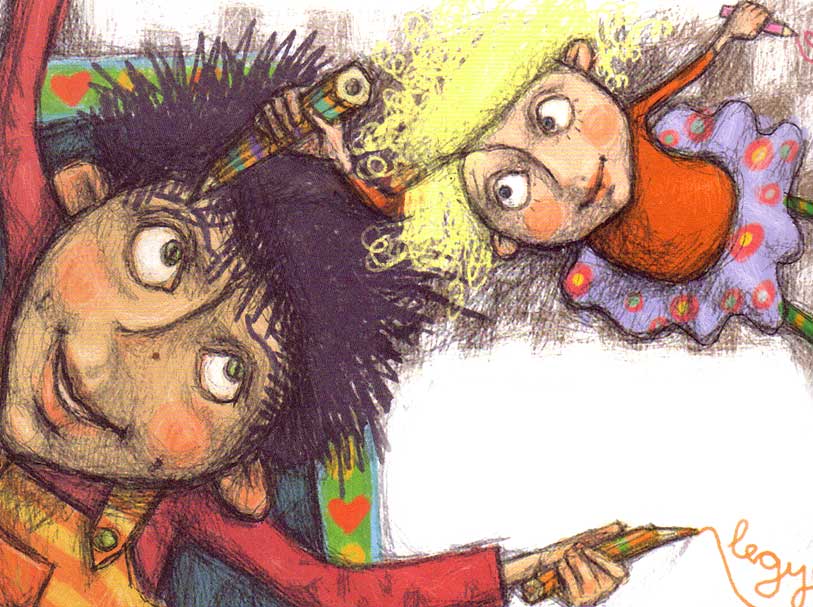
And so, they brought out a box of coloured pencils, and the girl carefully drew his face back — first the erased eyebrows, then the ears, in the exact order he had rubbed them away.
They remained friends for many, many years.
And whenever one of their faces faded or was accidentally erased by life, they would patiently redraw each other’s — every single time.
***
“The Little Boy Who Erased His Face” is a symbolic story about identity, loneliness, and the healing power of connection/true friendships.
Children sometimes struggle with feelings they cannot name — shame, isolation, fear of not being liked, or confusion about who they are. In the story, the boy “erases his face” as a playful act at first, but it gradually becomes a metaphor for losing his sense of self when he feels unseen or alone. Even without words for it, many children understand what it feels like to want to disappear — or to wish they could change something about themselves to feel accepted.
What ultimately restores him is not magic, punishment, or correction — but friendship. A kind peer who sees him, accepts him, and helps him “redraw” his face becomes the bridge back to selfhood. This reflects a psychological truth: children often rebuild their inner world through safe, caring relationships.
Parents can use this story to gently talk with their child about:
• Feeling sad, lonely, or “not themselves”
• Times they wished they could hide or change
• The importance of friends who understand
• How kindness can help us feel whole again
This is a quiet tale of emotional resilience — one that reminds children (and adults) that even when a part of us feels erased, the right kind of connection can help us draw ourselves back.
Illustrations:
© Fruzsina Kun – illustrations originally created for the Hungarian publication of “The Little Boy Who Erased His Face” in the anthology Egyszervolt (Once Upon a Time, 2006). Her illustration also appears on the cover of this book. Used with the artist’s permission.
The Old Teapot
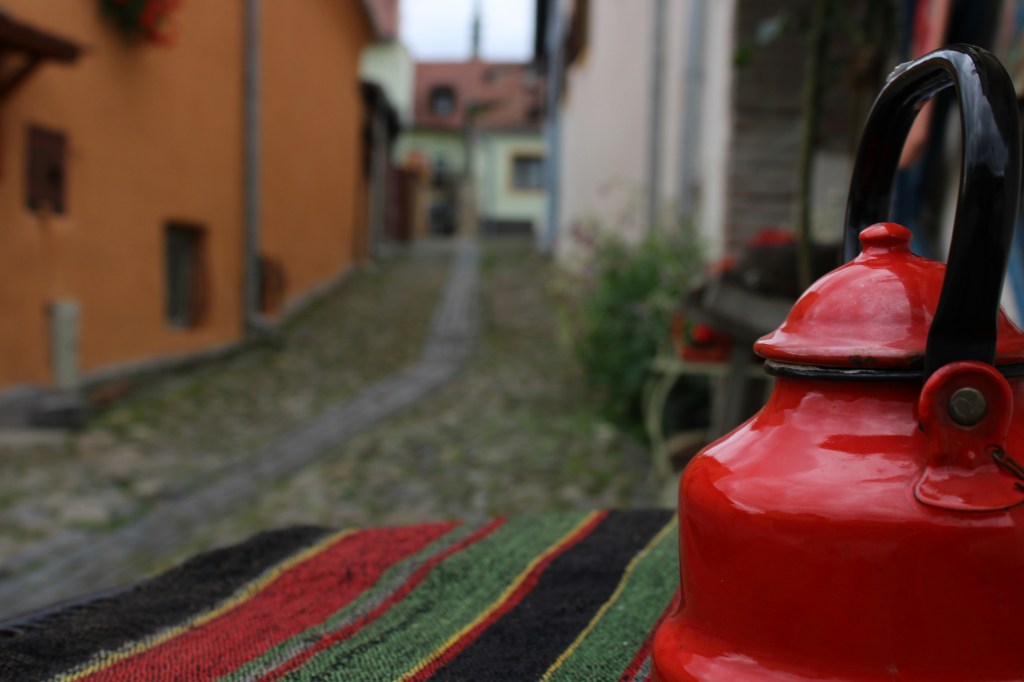
It was red. Boldly, unapologetically coral red. And it lived in a house where red was not welcome. Brown was fine. Grey was fine. Pale green was tolerated. But red? Absolutely not. Too loud, they said. Too strange. Too much. Yet the old teapot had once belonged to Grandma — a woman who didn’t judge things by colour. She loved objects for their memories. Each one carried a story, a moment, a heartbeat from long ago. And this teapot, though chipped in several places where the red paint had flaked away, still made the most wonderful tea — chamomile, mint, elderflower, even caraway. Whatever herbs went in, they came out tasting like comfort and warmth and quiet afternoons in Grandma’s kitchen. She kept it in her little pantry, on a shelf between the jars of jam and pickles.
The jars came and went each year, filled and emptied, replaced and renewed. Only the teapot stayed. But the older it got, the more out of place it felt among the new jars. “Things aren’t what they used to be,” the teapot would mutter to itself. “In the old days, jars understood things. We could talk about life… about hunger and winter and staying strong. But these modern jars? They just stare with their shiny new lids and say nothing. Maybe I’m the strange one now…” It talked less and less. Eventually it stopped trying to talk at all. The teapot grew silent, stiff, distant. Even the mice avoided it. Once, mouse mothers would gather their little ones around it at night to listen to stories. Now, the teapot’s cold stare frightened them away. One winter morning, something felt wrong. The pantry was bright with sunlight, long golden stripes stretching across the floor. But no footsteps came. No door creaked open. No gentle hand lifted the teapot from the shelf. Grandma did not come.
Not that day, nor the next, nor ever again. At first, the teapot waited patiently. Then anxiously. Then fearfully. Finally, trembling, it turned to the jars.
“Do… do any of you know what happened to Grandma?”
The jars shrugged in their glassy, indifferent way. They barely remembered her, except as the woman who sealed them shut every summer. They had no memories of her laughter or her cough when she was sick. No memories of her humming softly while she brewed tea.
They did not understand.
“But I was there when she raised her children,” whispered the teapot. “I held warmth for her when she was ill. I heard her stories, her laughter, her sadness. I stayed beside her for so many years… I need to know where she’s gone.”
The jars only clinked quietly among themselves, politely pretending to care while secretly rolling their eyes.
“Poor old thing,” they whispered behind its back. “Gone a bit odd with age.”
And so, winter passed. And spring.
And still no one came.
The little pantry slipped into silence so deep it felt like a forgotten attic of time.
Time passed quietly in the little pantry. Winter turned to spring, then faded into summer again — but no footsteps came down the hallway toward the wooden door. Dust began to gather on the shelves. The jars were replaced as always, but nobody came for tea.
One bright summer afternoon, the silence finally broke. The pantry door creaked open, and the old teapot’s worn handle tingled with hope — Grandma must have come for tea at last. But it was not Grandma. It was a young woman — one of her granddaughters, now grown — searching the shelves without familiarity, without warmth. Her eyes drifted over the jars, the tins, and finally landed nowhere at all.
She carried out a box filled with Grandma’s scarves, gloves, and faded photographs. Then she left. The door closed. Silence again.
Only this time, something cracked deep inside the old teapot. A restless tremor ran through its fragile body. It shifted — just a little — and then a little more. The shelf edge came too close.
And with a sudden clatter, the teapot fell — hitting the floor with a loud metallic gasp.
The lid rolled away in a crooked arc and disappeared beneath a shelf. For a moment, everything hurt — the metal ached with shock. But that crash had done something else: it had woken the sleeping box of old things.
Inside, the forgotten objects stirred.
A polished hairpin stretched languidly and sniffed disdainfully.
“What a miserable dusty place,” it muttered.
“Stop whining and mind your manners,” snapped a toothless wooden comb.
A cracked mirror rattled irritably.
“If someone tries to polish me again, I swear I’ll shatter myself out of spite.”
“Hush,” whispered Grandma’s old headscarf. “You’ll frighten the little ones.”
The objects froze for a moment, suddenly unsure — the little ones? Had someone else been here all along?
It was then that they saw the teapot — chipped, shaken, bent slightly from the fall, standing there in the sunlight that spilled from the small square window.
The teapot hesitated, gathering its courage, then spoke, voice trembling like steam on a cold morning:
“I… I’m waiting for Grandma. Do any of you know where she is?”
A pause.
Then the mirror, always too blunt, said flatly:
“She’s gone. She died. That’s what happens to people. They stop coming back.”
The teapot did not understand.
“What does that mean… died?”
“It means she’s not coming through that door ever again,” said the mirror. “End of story.”
“Don’t be cruel,” the scarf chided softly. “We all loved her.”
At that, something inside the old teapot caved in. Its bright coral-red surface seemed suddenly duller, faded by grief. The others watched as it trembled — not with restlessness now, but with sobbing, though a teapot cannot cry.
“I brewed her tea when she was sick,” it said weakly. “I heard her laugh. I heard her cry at night.
I warmed her hands on cold mornings. I… I don’t know what to do if she’s gone.”
The objects, even the grumbling comb and vain mirror, fell silent.
For a moment, all of them stood together in that dusty pantry with the stillness of deep, aching absence.
Then, very quietly, as if speaking to itself, the teapot whispered:
“I must find her.”
The pantry door opened again — not for Grandma, not even for comfort — but for clearance.
A pair of unfamiliar hands lifted box after box. The jars were packed away. Shelves were emptied. And when they came to the teapot, there was no hesitation. No last glance. No recognition.
“Finally getting rid of this old, ugly red thing,” someone muttered.
“She always kept the weirdest stuff…”
And just like that, the teapot was tossed — lidless, heart heavy — into a large box marked junk.
From there, the world became noisy, cold, and always moving.
There were bumpy rides, careless thuds, and at last — a hard landing on rough pavement. The box was dumped out like a pile of bones. And now the teapot lay at the top of a heap of discarded belongings in the street.
No shelf. No jars. No kitchen light.
No Grandma.
Days passed. The pavement was cold. People walked by. Some glanced, some wrinkled their noses, some kicked other objects aside. No one touched it with care.
By the third day, even grief began to feel heavy and numb.
Maybe I will rust here, thought the teapot. Maybe that is what happens when you no longer belong anywhere.
Then came the garbage truck.
With a loud growl and metal jaws, it began lifting heaps of trash. The teapot didn’t resist. It barely moved. Whether it was crushed, buried, or burned — it hardly mattered now.
But fate, or perhaps clumsiness, had other plans.
As a worker heaved the trash, the teapot was accidentally knocked loose. It rolled off the edge of the pile, clattering painfully, and tumbled into the narrow gap behind a lamppost — just out of sight.
The truck roared away.
Silence again.
Until a pair of slow, shuffling footsteps approached.
A weathered old man in a long-worn coat stopped beside the lamppost. His eyes were tired but kind. He bent down, squinting.
“Well now… look at you,” he murmured gently. “Pretty thing once, I bet. Left behind, huh?”
It was not a question he expected the teapot to answer.
He lifted it with surprising tenderness.
“You and I are not so different,” he whispered. “Thrown out when we stopped being useful.”
He tucked the teapot carefully into his frayed satchel.
“Come on then. It’s cold out here. You’ll come with me.”
That evening, under the shadow of a bridge where the old man slept, they made a small fire in a rusted can. He set the teapot beside him—not for tea, not yet, but almost as if it were a companion.
“Nobody calls me by any name these days,” he said softly, staring into the flames. “But once… someone did. Maybe I’ll tell you about her some night.”
He sighed, pulled his coat tighter, and patted the teapot.
“I’ll take care of you now. And maybe, on special days, we’ll make tea again.”
For the first time since Grandma’s shelf, the teapot did not feel entirely alone.
The seasons passed under the bridge.
Though the old man rarely brewed tea — it was a rare luxury — he spoke often to the teapot. In
quiet evenings by the small fire, he told stories of the life he once had: a kitchen with laughter, a wife who danced while stirring soup, a child who used to bring him wildflowers.
Sometimes, while he spoke, his rough fingers would lightly trace the teapot’s coral-red surface as though remembering what tenderness felt like.
“You know,” he said once, “she liked tea with honey… said it made sadness more polite.”
One icy winter morning, as they wandered the streets searching for warmth or kindness, the old
man collapsed. By the time help arrived, he was shaking violently. Paramedics lifted him onto a
stretcher. His satchel — with the teapot tucked inside — slipped from his shoulder and hit the ground with a dull thud.
“Sir — your bag?” a nurse asked gently.
But he was already unconscious, breathing in short gasps. They took him away.
The bag and the teapot stayed behind.
A hospital orderly found them, examined the contents, and sighed.
“Old junk. Can’t take this in.”
And so, the teapot found itself discarded again — this time on a cold pile of broken things in the hospital’s back lot.
No jars. No pantry. No old man by the fire.
It lay motionless.
This must be the end.
Grandma is gone. The old man is gone. I have been loved and abandoned twice.
But just as frost began to cling to its chipped handle, a different kind of chance arrived.
A man in a long dark coat moved quietly through the lot. An antique dealer — known for scouring forgotten corners for overlooked treasures.
He paused when he spotted the faint coral red beneath the frost. His eyes brightened.
“Well now… you’re rare,” he whispered, lifting it with careful hands. “A limited pattern. Mid-century. Hard to find in this condition…”
He brushed the dirt away, inspecting every curve with practiced admiration.
“I can fix you.”
He did.
Back in his little shop, he polished the metal, restored the chipped enamel, carefully fitted a replacement lid. In the lamplight, the teapot gleamed — brighter than it had in years, yet carrying a silent depth only something long-lived and well-travelled could hold.
He placed it on a high shelf in the front of the store — believing someone would eventually see what he saw.
But days passed. Then weeks. Then months.
People came and went — curious, polite, dismissive.
“Strange colour.”
“Too old-fashioned.”
“Smells a bit like herbs.”
The dealer eventually shifted it lower and lower on the shelves — until at last it rested on the bottom one, half-hidden among forgotten curiosities.
And there it stayed.
Quiet.
Waiting.
Not knowing for whom.
Until one afternoon, a young mother entered the shop with her three small sons.
“We’re looking for a teapot,” she said, “like the one my grandmother used to have. It was red — coral red. Sort of odd-shaped. And no matter what tea you brewed in it, the steam always smelled faintly of chamomile, or mint, or elderflower…”
The antique dealer paused. Slowly, he bent down to the lowest shelf.
When he placed the coral-red teapot on the counter, the woman gasped.
Her eyes softened with memory.
“This is it,” she whispered. “It’s exactly like hers.”
She lifted it gently, almost reverently, as though afraid it might disappear.
“My grandmother kept it even when the rest of the family hated the color. She said it made tea taste like… home.”
When she held it, something flickered awake inside the teapot — a warm, fragrant echo deep in
its metal heart:
Grandma humming.
Steam rising.
Laughter in the kitchen.
A little girl with brown eyes and shy dimples holding a cup with both hands.
Yes.
It remembered.
Tears welled in the woman’s eyes as she looked at the teapot.
“Welcome back,” she murmured softly — though she didn’t quite know why she said it that way.
She bought it at once — even when the dealer doubled the price, sensing sentiment was worth much more than enamel.
And so the teapot returned — not to the same house, but to the same lineage of love.
Back to chamomile and elderflower.
Back to children running through kitchens.
Back to someone who brewed tea not for guests, but for souls in need of warmth.
And sometimes, when late at night the house fell quiet and the young mother sipped tea alone at
the window, she found herself stroking the teapot’s coral-red curve gently without knowing why — the same way the old man once did, the same way Grandma had done.
And somewhere deep in its metal memory, the teapot no longer ached to belong.
Because it had come home — not to a place, but to a feeling.
***
The Old Teapot gently explores the themes of love, loss, belonging, and resilience through a symbolic journey that is easy for children to feel, even if they cannot yet fully analyse it.
• The teapot represents things — and people — who once felt loved and useful but later feared being forgotten or replaced.
• Children often face similar fears: What if no one needs me anymore? What if I am left behind or outgrown?
• The story shows that being discarded or overlooked doesn’t mean we are worthless — sometimes it simply means we haven’t yet reached the place where we are meant to belong again.
• It teaches that love doesn’t disappear when circumstances change — it can survive separation and return in unexpected ways.
• The teapot’s journey shows children that even after painful losses, they can find new forms of connection, safety, and meaning.
• It also emphasizes loyalty and emotional memory: what was once treasured often remains quietly remembered and may return when the time is right.
• Finally, it reassures sensitive children that being “different” or “unfashionable” does not make someone unlovable. Sometimes, uniqueness is exactly what someone has been waiting for.
This story offers comfort to children (and adults) who fear abandonment or change — reminding them that even if life takes them far from where they once felt safe, they can still find warmth and home again.

